Transition Play Statistics Offering Insights for In-Game Betting Decisions in Top Leagues
Yara Albrecht · Jun 8, 2026
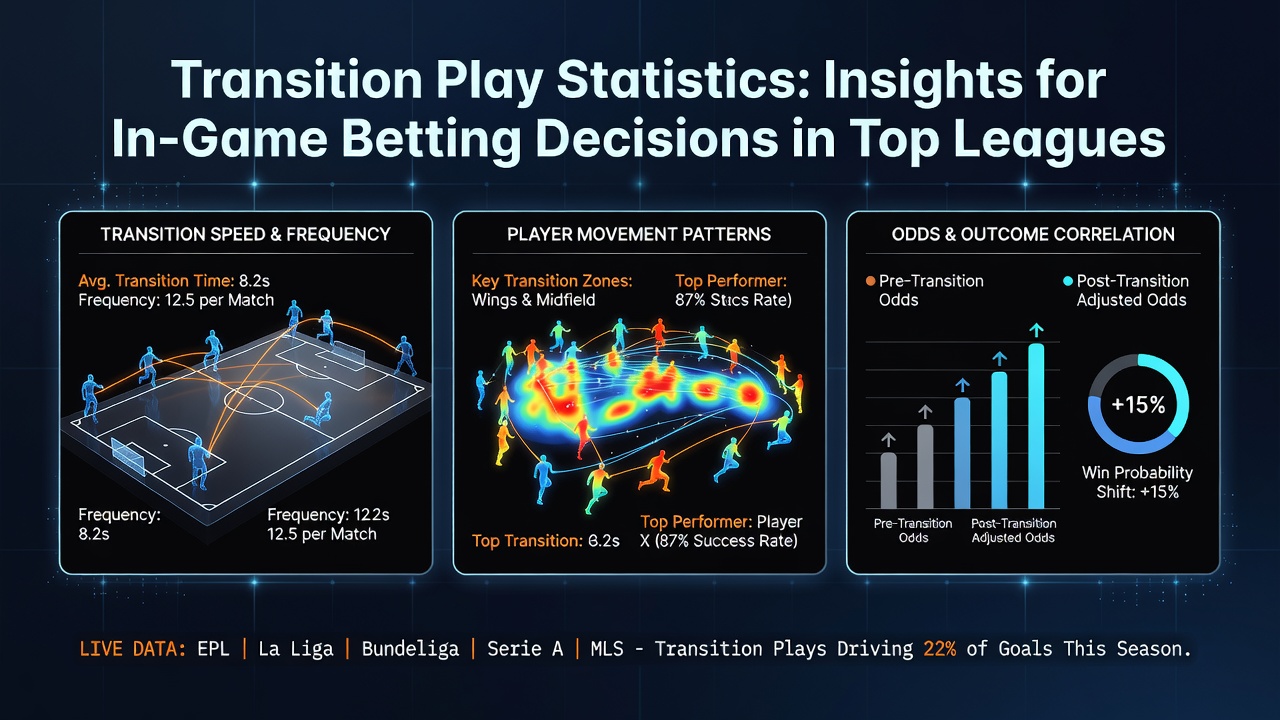
Transition Play Statistics Offering Insights for In-Game Betting Decisions in Top Leagues
Transition plays have emerged as a key focus in data analysis for major football leagues, where teams shift rapidly from defense to attack following turnovers. These moments create measurable opportunities that shape live betting markets in competitions such as the Premier League, Bundesliga, and Serie A. Observers note that transitions account for a significant portion of goals scored in open play, with figures revealing around 35 percent of goals in top divisions stemming from counter-attacks during the 2025-2026 season.
Analysts track metrics including recovery time after possession loss, speed of forward progression, and conversion rates into shots. In the Bundesliga, teams average 18 transitions per match that advance beyond the halfway line, while Ligue 1 sides show slightly lower volumes yet higher efficiency in finishing those moves. Such patterns allow bettors to identify windows for wagers on next-goal markets or over/under totals once a team regains the ball in dangerous areas.
Measuring Transition Effectiveness Across Leagues
Data providers compile detailed logs of every possession change, highlighting how quickly teams move the ball into the final third. Research from the International Centre for Sports Studies indicates that Premier League clubs complete transitions in an average of 8.2 seconds from recovery to shot, a figure that has remained stable through June 2026. This consistency helps inform decisions on live bets placed immediately after defensive actions, particularly when teams known for quick breaks face opponents that press high.
La Liga presents a contrasting profile, where teams favor controlled build-up yet still generate transition threats on the break. Figures show that 42 percent of away goals in La Liga during 2025 came via rapid counters rather than sustained possession sequences. Bettors monitoring these trends often adjust stakes on both-teams-to-score markets when a side concedes possession in midfield and the opposition deploys speedy wingers.
Live Betting Applications in Real Time
Bookmakers adjust odds dynamically as transition data updates during matches. A team winning the ball in its defensive third triggers spikes in probability models for the opposing side to score next, especially if historical patterns show strong counter-attacking records. One study released by Opta highlighted that Serie A sides score within 15 seconds of regaining possession 12 percent of the time when playing against teams that commit numbers forward.
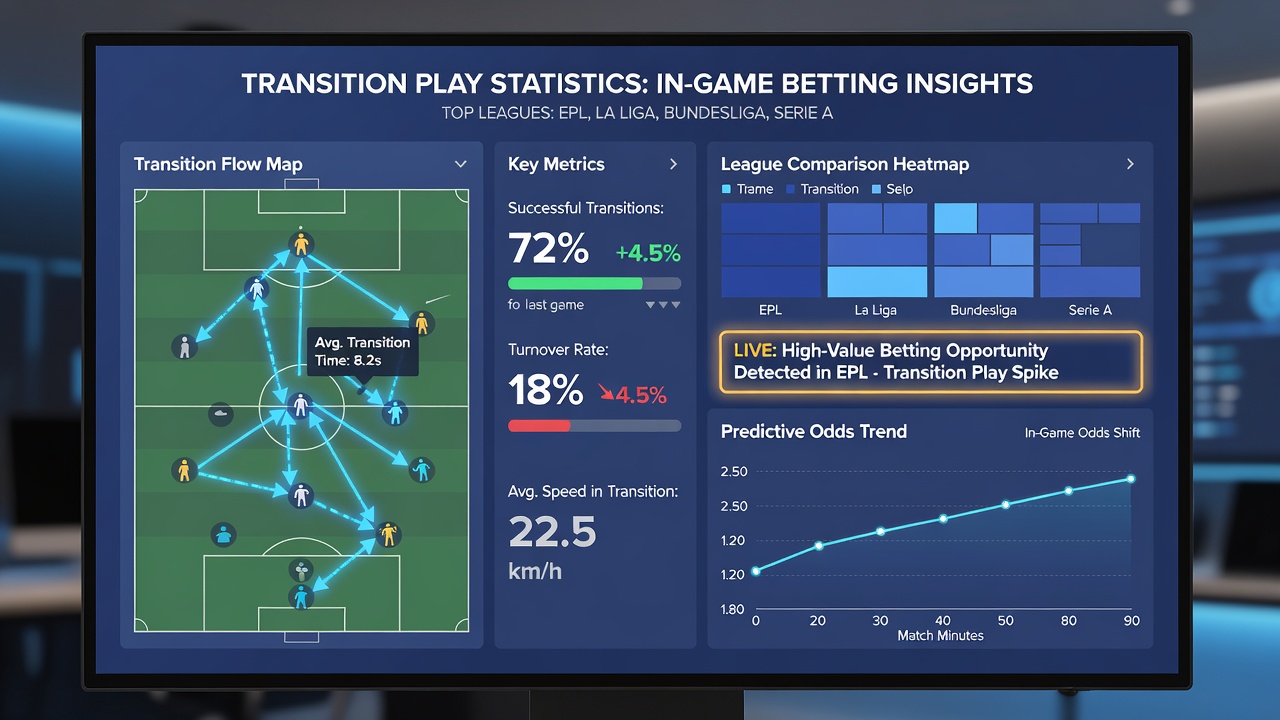
Those who follow these statistics closely integrate recovery location and player positioning into their assessments. For instance, transitions starting from wide areas produce different betting edges compared with central recoveries, as wide starts often lead to crosses and second-ball situations. In the 2025-2026 campaign, Bundesliga data showed central recoveries yielding shots 28 percent of the time within 10 seconds, while wide recoveries converted at 19 percent.
League-Specific Patterns and Market Responses
Each competition displays unique transition signatures that influence in-play options. Ligue 1 matches feature fewer overall transitions yet higher goal conversion from those that occur, partly because defensive lines sit deeper on average. This creates pockets where bettors target over 2.5 goals once the first transition goal appears, given the league's tendency for games to open up afterward.
Premier League fixtures, by contrast, generate frequent high-tempo transitions due to intense pressing styles. Data compiled through June 2026 reveals that matches involving the top six clubs produce 22 percent more transition shots than league averages. Live accumulators built around timing of first transition goal or total transition shots in a half draw from these established trends.
External factors such as fatigue and substitutions further modulate transition quality. Teams that make attacking changes midway through the second half see transition success rates climb by up to 15 percent in the final 20 minutes, according to reports from the European Club Association. Bettors tracking substitution patterns therefore find value in adjusting expectations for late momentum swings driven by quick breaks.
Conclusion
Transition statistics continue to refine how markets respond during matches across Europe's leading leagues. By focusing on recovery zones, speed metrics, and conversion efficiencies, participants gain structured inputs for timing wagers on goals, cards, and other in-play outcomes. These data layers integrate with broader match context to support decisions that reflect observed patterns rather than speculation alone.