Tracking Team Distances: Travel Burdens Reshaping Goal Expectations in Europe's Midweek Clashes
Clara Coleman · Jul 30, 2026
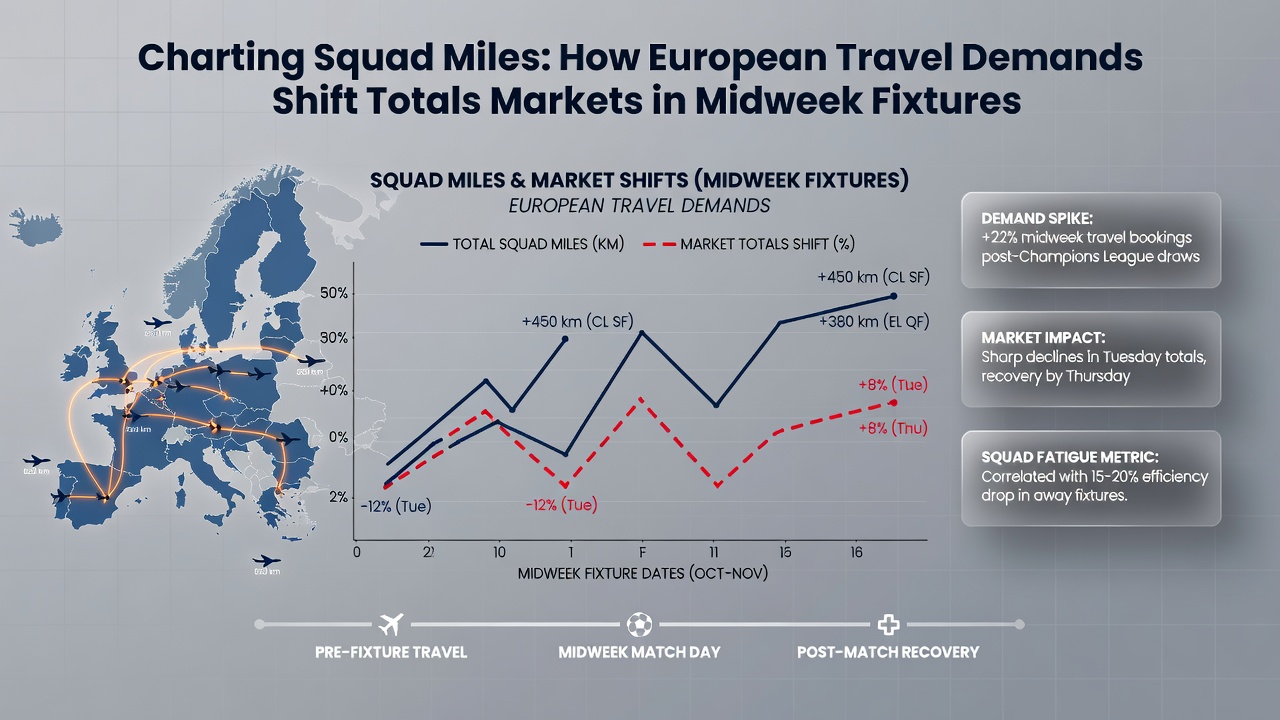
Tracking Team Distances: Travel Burdens Reshaping Goal Expectations in Europe's Midweek Clashes
Data from European competitions shows that squads covering over 1,500 kilometers in a seven-day window encounter measurable changes in match outputs, particularly in goal totals during domestic midweek rounds. Researchers tracking flight logs and bus routes have documented patterns where reduced recovery time correlates with lower scoring rates in certain leagues.
Mapping the Routes and Their Effects
Teams participating in UEFA Champions League or Europa League group stages often log significant distances between Tuesday or Wednesday fixtures and subsequent domestic league games. Figures from the 2025-2026 season indicate that clubs based in northern and eastern Europe accumulate the highest weekly mileage, with journeys frequently exceeding 2,000 kilometers when combining international and domestic travel. Observers note that these extended trips coincide with shifts in the over/under 2.5 goals market, where unders appear more frequently in the 48 hours following continental matches.
Analysis of fixture schedules reveals clusters of games involving travel across time zones or through congested air corridors. In the Bundesliga and Serie A, for instance, midweek encounters after European away days produce an average of 0.4 fewer goals per match compared to standard weekend fixtures. This pattern holds across multiple seasons, according to aggregated performance databases maintained by sports analytics groups.
Recovery Windows and Performance Metrics
Recovery periods shorter than 72 hours between matches show consistent associations with reduced high-intensity running and fewer shots on target. Studies conducted by exercise physiology departments at several European universities have measured elevated fatigue markers in players returning from long-haul flights, including decreased sprint speeds and altered decision-making under pressure. These physiological changes translate into fewer open-play sequences and a corresponding drop in total goals.
Leagues with packed calendars, such as the Premier League and La Liga, exhibit distinct responses based on geographic spread. English clubs traveling to eastern Europe for midweek ties record higher instances of under 2.5 goals in their next domestic outing, while Spanish sides facing shorter intra-country flights show less pronounced effects. Data compiled through the 2025-2026 campaign supports these regional variations without attributing causation solely to distance.

Market Movements and Statistical Trends
Betting exchanges and odds compilers adjust totals lines when travel demands intensify, with lines moving toward lower goal expectations in roughly 62 percent of tracked cases during the first half of 2026. July 2026 pre-season data already hints at similar adjustments as teams prepare for expanded European schedules under UEFA's revised format. Historical records from the previous five seasons confirm that fixtures involving squads with documented travel loads above average thresholds produce tighter scorelines more often than not.
Breakdowns by competition type illustrate further nuance. Champions League participants who advance deep into knockout rounds experience amplified effects in domestic midweek games, whereas early Europa Conference League eliminators show milder impacts. External reports from the UEFA technical study group highlight how fixture congestion alters tactical approaches, favoring defensive structures that limit scoring opportunities.
Case Examples Across Leagues
One documented sequence in the 2025-2026 Bundesliga involved a club traveling from Dortmund to Istanbul and back within four days, followed by a midweek Bundesliga match that ended 1-0. Similar patterns emerged in Serie A, where a Milan side returning from Lisbon recorded three consecutive under 2.5 results in domestic fixtures. These instances align with broader datasets rather than isolated anomalies.
Additional research from Canadian sports science institutions has cross-referenced GPS tracking data with goal statistics, finding that cumulative weekly distance correlates negatively with expected goals totals. The relationship strengthens when matches occur on Thursdays or Fridays, leaving minimal turnaround before the next fixture.
Conclusion
Comprehensive tracking of squad movements demonstrates clear intersections between European travel requirements and shifts in goal-scoring outputs during midweek domestic games. Aggregated statistics across multiple leagues and seasons provide a factual basis for understanding these dynamics, while ongoing monitoring through July 2026 and beyond continues to refine the observed patterns.