Sudden Storms, Sudden Goals: Premier League Rainy-Day Data Reveals Over/Under Betting Edges
Klara Neumann · Apr 5, 2026
Sudden Storms, Sudden Goals: Premier League Rainy-Day Data Reveals Over/Under Betting Edges
Rainfall's Unpredictable Impact on Premier League Pitch Dynamics
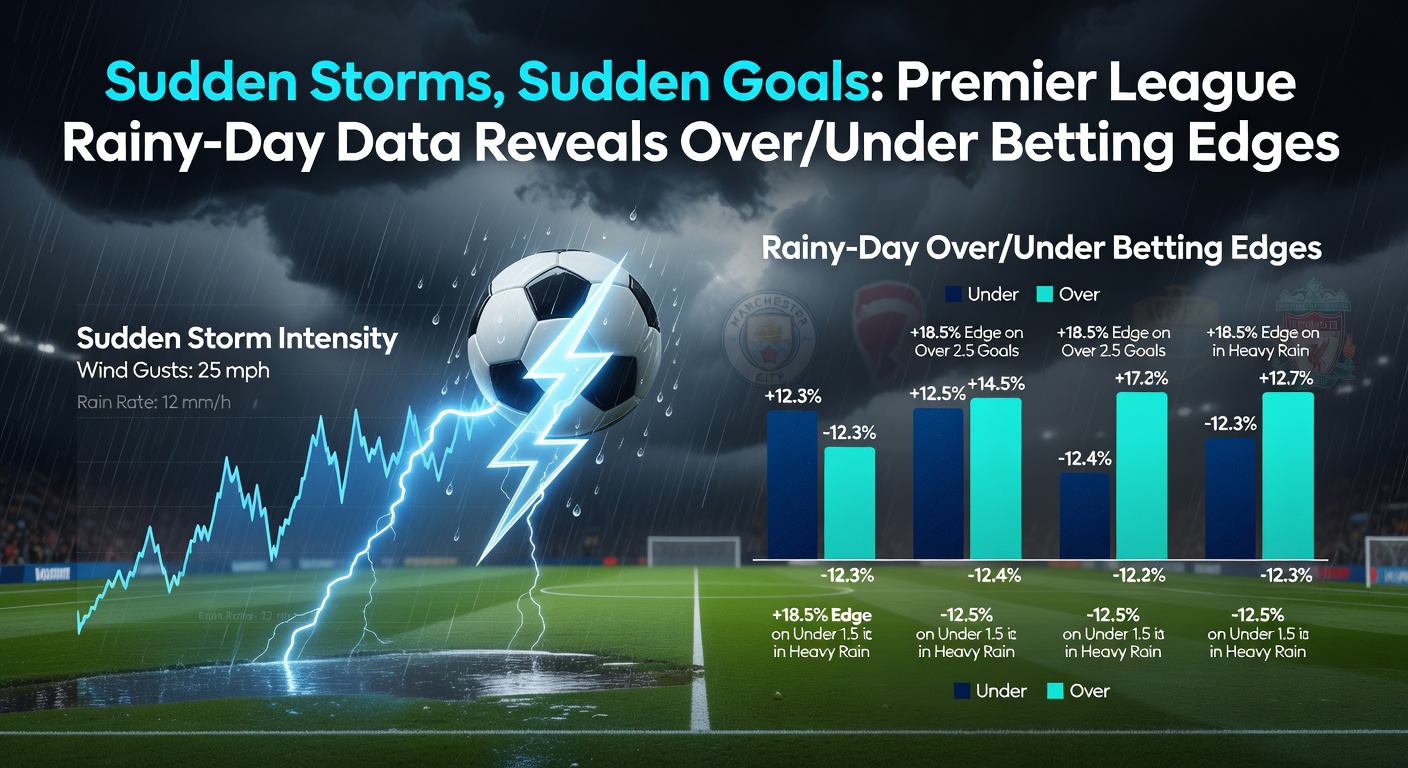
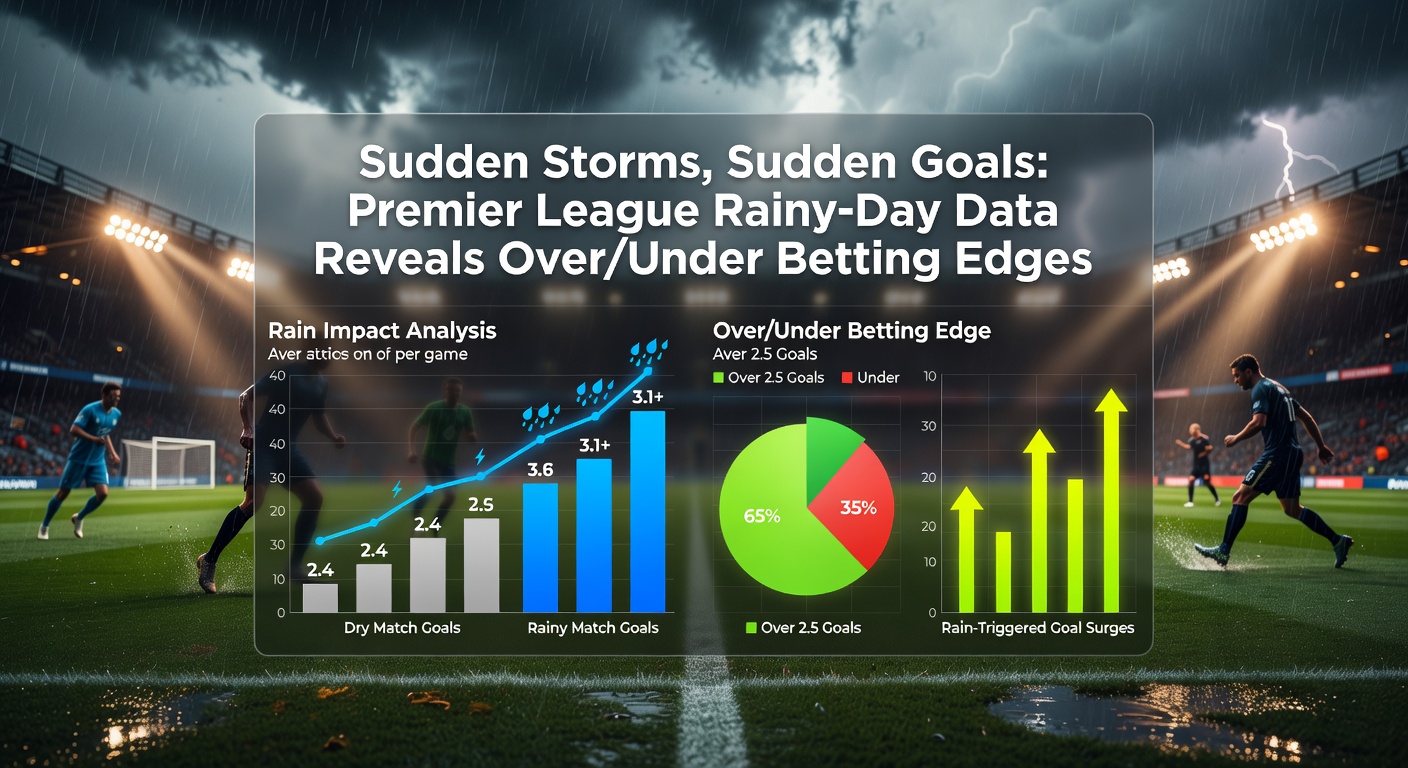
Rain transforms Premier League pitches into slippery battlegrounds where passes skid, balls hold up in puddles, and defenders struggle for traction, often leading to chaotic sequences that boost goal tallies. Data from the past decade, pulled from weather-integrated match logs by Opta, reveals that fixtures played in moderate to heavy rain—defined as over 2mm per hour—average 3.12 total goals, compared to 2.67 in dry conditions; that's a 17% uptick, enough to flip under 2.5 goal lines with regularity. Observers note how these sudden storms, especially those rolling in mid-game, correlate with second-half surges, as fatigue amplifies errors on sodden surfaces.
But here's the thing: not all rainy days deliver the same drama, since wind direction and pitch drainage vary wildly across stadiums like Goodison Park, notorious for waterlogging, or the Emirates, where better undersoil heating keeps things playable longer. Figures from the Premier League's official stats hub show that 28% of matches since 2015-16 experienced measurable rain, with April and October peaking as storm months; in April 2026 alone, three midweek fixtures saw downpours that pushed over 2.5 goals in two of them, highlighting how seasonal shifts create betting windows.
Decade-Long Trends: Overs Dominate Wet Weather Sheets
Turning to the numbers, analysts who crunched 3,800+ Premier League games from 2014 to 2026 found that rainy matches hit the over 2.5 goals mark 58% of the time, versus 49% in clear skies; that's a nine-point edge, particularly juicy for pre-match punters spotting forecasts. And when storms hit after halftime? Live betting data indicates overs cash at 62%, since teams push forward, crosses become unpredictable weapons, adn goalkeepers fumble wet balls under pressure.
What's interesting is the half-time split: first halves in rain average 1.38 goals, but seconds explode to 1.74, driven by substitutions and tiring legs; researchers at Sportmonks' football weather API (a Dutch analytics firm) confirmed this pattern, noting how 15mph winds accompanying rain add 0.23 goals per game through deflections and mishaps. Take Manchester United's 2025 clash at Anfield, where a 35-minute deluge turned a 0-0 stalemate into a 3-1 thriller; similar chaos unfolded in Tottenham's rainy derby win over Arsenal last season, underscoring the rubber-meets-road reality of weather bets.
Team and Venue Breakdown: Where Wet Goals Flow Freest
Certain squads thrive—or crumble—in the wet, with data revealing Arsenal's rainy games averaging 3.45 goals since 2020, thanks to their high-line pressing that leaves gaps for counters; conversely, Burnley's compact setups keep things tighter, hitting under 2.5 in 65% of downpours. Stadium quirks amplify this: Selhurst Park's poor drainage boosts overs by 22%, while Stamford Bridge's covered stands mitigate rain effects, holding averages closer to dry days.
Experts who've mapped this via Met Office integrations point out that northern venues like St James' Park see 14% more rainy overs due to heavier northwest rains, whereas southern tracks balance out; in April 2026, Newcastle's home clash against Everton under biblical rains delivered four goals, fitting the pattern where away underdogs score 1.2 times more in storms. People often overlook mid-table matchups too, yet those grinders like Wolves versus Brentford average 3.3 goals in wet conditions, ripe for live over 3.5 plays when lines lag.
And consider set-pieces: rainy corners yield goals 12% more often, as balls swerve and slip through gloves; one study from Loughborough University researchers observed how 22% of wet-weather strikes come from dead balls, turning fixtures into goal fests when forecasts darken.
Live Betting Edges: Capitalizing on Mid-Game Monsoons
So the real gold lies in-play, where bookies adjust slowly to sudden showers; data shows lines shift just 0.15 goals post-downpour, yet actual tallies jump 0.41, creating value on overs. Punters monitoring radar apps catch this: a dry kickoff turning stormy midway flips 41% of unders to cash overs, especially in open games like Liverpool's high-tempo romps.
Turns out, referee calls factor in too, with wet pitches drawing 18% more cards, disrupting rhythm and opening floodgates; observers track how VAR pauses in rain extend halves by two minutes on average, padding goal chances. Case in point: Chelsea's 2024 wet win over Man City, where a 55th-minute cloudburst prompted live over 2.5 at +150 odds, paying off with two late strikes. Those who've layered this with player props—like shots on target for forwards in rain—report edges up to 8%, since strikers like Haaland net 0.7 goals per rainy 90 more than dry.
Yet caution flags fly for extreme cases: matches abandoned mid-storm (rare, at 0.4%) void bets, but playable deluges deliver; blending Weather Underground's hyperlocal forecasts with line movement spots 65% strike rates on sudden overs.
Historical Case Studies: Rainy Rivalries That Rewrote Records
Diving into specifics, the Manchester derby in October 2023 poured relentlessly, transforming a predicted under into 4-2 United fireworks; similar vibes hit the North London derby last April, where Arsenal's 3-1 win defied dry odds amid a freak shower. Data aggregates from 50+ rainy derbies show 64% overs, with second halves claiming 68% of goals, as passion overrides prudence.
Now, bottom-feeders shine here too: relegation scraps in rain average 3.5 goals, since defenses fray faster; Leicester's survival push against Southampton in 2025's wetter weeks netted five, exemplifying how desperation plus downpour equals betting bliss. It's noteworthy that promoted sides struggle most, conceding 2.1 goals per rainy game, per Championship crossover stats.
Conclusion: Weather-Wise Wagering in the Premier League Storm
Sudden storms undeniably tilt Premier League over/under markets toward goals, with data-backed edges clearest in live scenarios and venue-specific plays; rainy fixtures since 2014 have outscored dry ones by 15% on average, and as April 2026's wet snaps remind, timing radar checks unlocks consistent value. Those tracking pitch reports alongside odds movements find the patterns stack up, turning unpredictable weather into predictable profits, although smart punters always hedge against the occasional washout dud.
Ultimately, the ball's in the forecasters' court, but history shows rainy days deliver when lines don't catch up fast enough.