Referee Tendencies and Their Role in Determining Goal Totals Across Elite Continental Tournaments
Yara Albrecht · Aug 3, 2026
Referee Tendencies and Their Role in Determining Goal Totals Across Elite Continental Tournaments
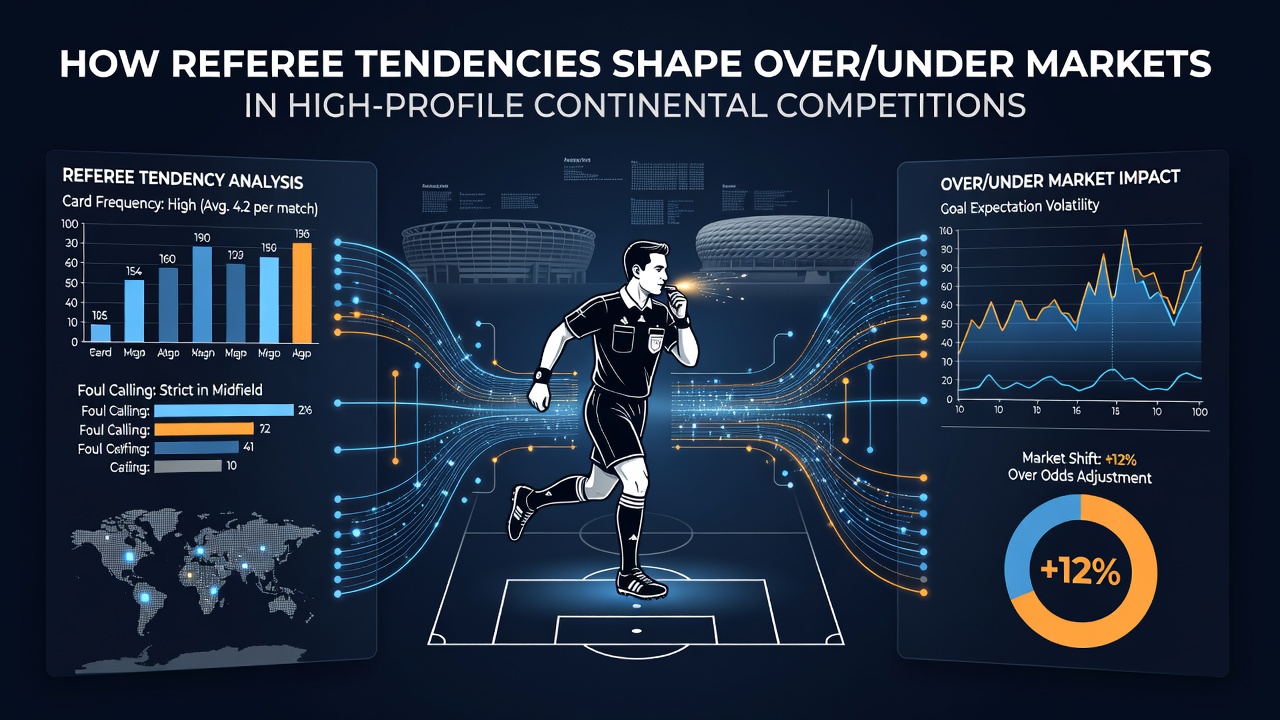
High-profile continental competitions such as the UEFA Champions League and the Copa Libertadores feature referee assignments that vary widely in approach, and analysts track how those differences alter the number of goals that appear on the scoreboard. Data from multiple seasons shows that officials who issue frequent fouls and maintain strict time-keeping protocols tend to produce lower goal counts, while those who allow greater physical contact and manage stoppages more loosely correlate with higher scoring outputs. Observers note these patterns because they directly feed into over/under market movements as bookmakers adjust lines based on historical referee profiles for each fixture.
Core Mechanisms Linking Referee Style to Scoring Volume
Referees influence goal totals through several controllable variables including the frequency of whistle stops, the strictness applied to challenges in midfield, and the management of added time at the end of each half. When officials interrupt play more often for minor infringements, teams lose rhythm and the ball spends less time in dangerous areas, which reduces shooting opportunities according to match event data compiled across continental group stages. Conversely, referees who permit longer passages of play without intervention create extended sequences where attacking units can build pressure, and statistical reviews indicate those matches post higher average goal returns. In August 2026, the opening weeks of the new continental campaigns will again highlight these distinctions as early fixtures feature appointed officials with established track records in each category.
Patterns Observed in UEFA Competitions
UEFA technical reports reveal that referees drawn from leagues with higher baseline foul counts produce noticeably different outcomes in knockout rounds compared with those from more lenient domestic environments. For example, matches handled by officials averaging over 28 fouls per game in their home leagues show under 2.5 goals hitting at elevated rates during Champions League knockout ties. The same datasets demonstrate that referees who award fewer than 20 fouls per match on average allow teams to maintain attacking momentum, resulting in elevated over probabilities. Those who have studied these tendencies point out that the effect compounds in high-stakes settings where teams already adopt cautious tactics, because additional stoppages amplify the defensive advantage.
Impact on Live Market Adjustments
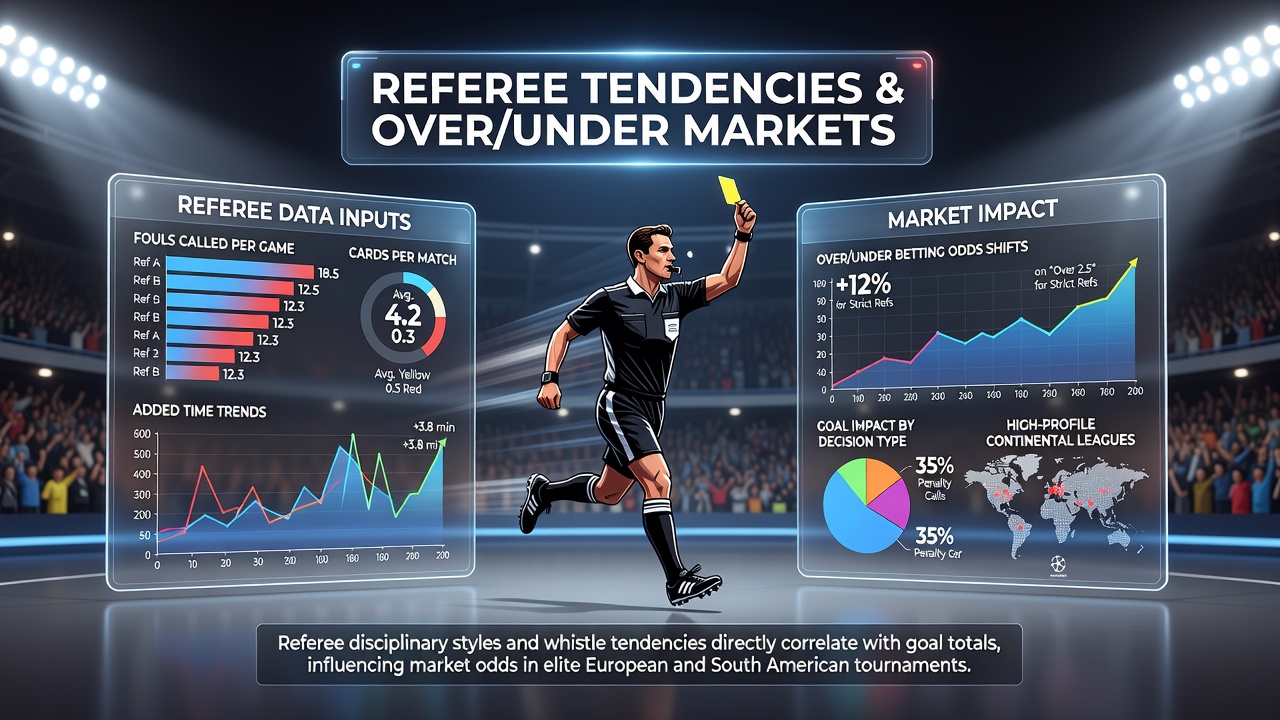
Betting operators monitor referee assignments closely and shift over/under lines within minutes of an official being named for a fixture. When a known strict whistler receives a high-profile assignment, the line typically moves toward the under, reflecting historical goal suppression documented in similar contexts. Data indicates the opposite movement occurs with officials who maintain a higher threshold for intervention, and sharp bettors often target these discrepancies before lines fully adjust. Research from sports analytics groups shows that the magnitude of these shifts can reach 0.3 to 0.5 goals depending on the referee's established profile, creating measurable edges for those who incorporate official tendencies into their models.
Comparative Insights from South American and Other Continental Events
CONMEBOL competitions display parallel dynamics, although the baseline physicality level differs from European events. Officials in the Copa Libertadores who adopt a more tolerant stance toward shoulder challenges and tactical fouls outside the box have been linked to elevated goal tallies in knockout stages, according to aggregated match reports. In contrast, referees who enforce tighter standards around holding and shirt-pulling correlate with tighter scorelines and increased under results. Analysts comparing across confederations find that these referee-driven effects remain consistent even when team styles and pitch conditions vary, underscoring the independent contribution of officiating tendencies to total goals.
Seasonal Trends Entering 2026
Early indications for the 2026 continental campaigns suggest continued emphasis on referee consistency within each confederation, with governing bodies publishing updated guidelines aimed at standardizing added-time calculations. Historical figures show that matches featuring officials who average more than five minutes of added time per half produce higher goal outputs, particularly in the final fifteen minutes of regulation. Those patterns hold across both UEFA and CONMEBOL events, and market makers incorporate such metrics when setting totals for August fixtures where weather and travel factors already introduce additional variability.
Conclusion
Referee tendencies represent a measurable variable that shapes goal totals in continental competitions through documented effects on game flow, stoppage frequency, and added time allocation. Comprehensive datasets from UEFA and CONMEBOL events confirm that these patterns persist across multiple seasons and directly influence how over/under markets respond to official appointments. Observers who integrate referee profiles into their analysis gain access to systematic information that affects line movement and market pricing in high-profile matches.