Patterns in Refereeing Across Europe's Major Football Leagues and Their Influence on Card Markets
Erik Albrecht · Jun 11, 2026
Patterns in Refereeing Across Europe's Major Football Leagues and Their Influence on Card Markets
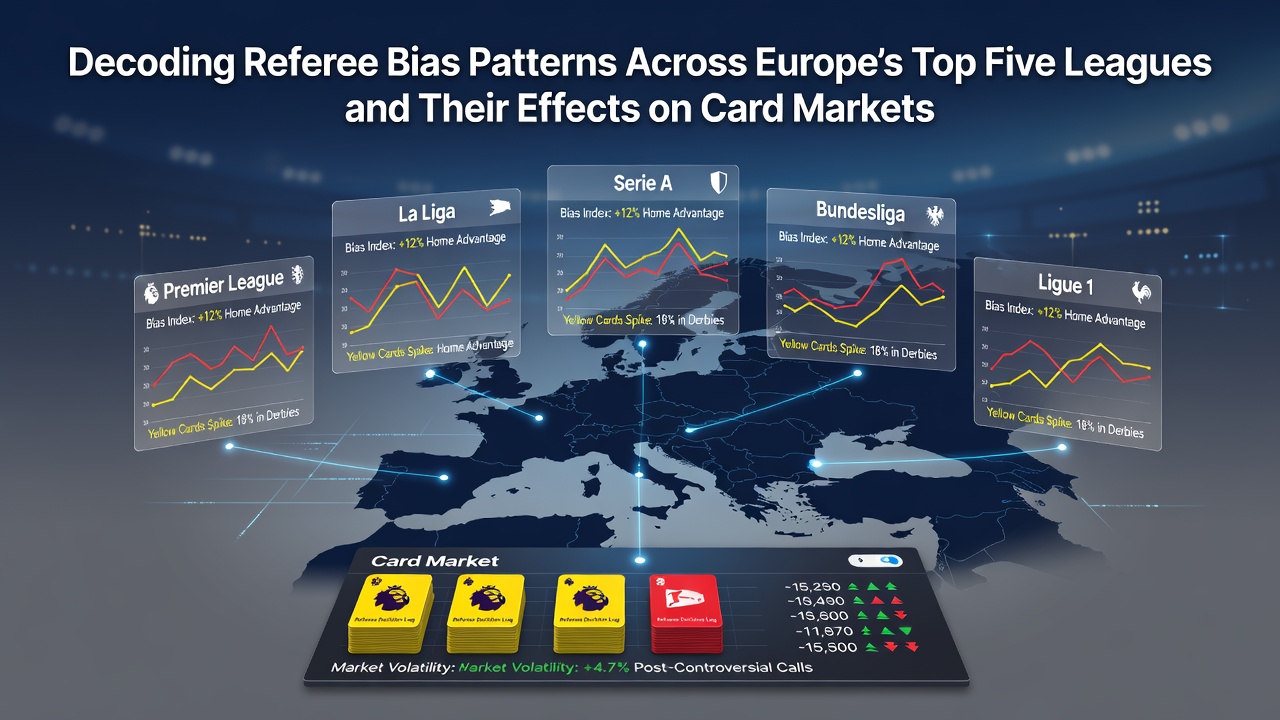
Referee decision patterns in Europe's top five leagues reveal consistent variations in card issuance that shape outcomes in disciplinary betting markets, according to aggregated match data collected through 2025 and into June 2026. Analysts tracking these trends note how officials in the Premier League, La Liga, Serie A, Bundesliga, and Ligue 1 apply rules differently based on match context, team styles, and venue factors, which creates measurable edges for those monitoring card totals and player bookings.
Data compiled from thousands of fixtures shows that home teams receive fewer cards on average across all five competitions, yet the gap widens significantly in certain leagues where crowd influence or travel fatigue plays a larger role. In Bundesliga matches, for instance, away sides collect 1.8 more yellow cards per game than their hosts, a disparity researchers link to higher pressing intensities that force referees into more stoppages.
League-Specific Card Trends and Official Tendencies
Each league demonstrates distinct referee profiles that affect over/under card markets in predictable ways. Premier League officials issue an average of 5.2 cards per match, with red cards appearing in roughly 12 percent of games during the 2025-26 season. La Liga referees maintain a stricter stance on dissent, producing 0.4 more yellows for verbal infractions than their counterparts in other leagues, according to figures released by the Spanish Football Federation.
Serie A continues to post the highest overall card counts, averaging 5.8 per fixture, driven largely by tactical fouling in midfield battles. Bundesliga games, while fast-paced, yield fewer cards at 4.7 per match because officials favor advantage play more often. Ligue 1 sits in the middle at 5.1 cards, though its referees show greater variance in stoppage time decisions that can push totals higher in tight contests.
Impact on Card Betting Markets
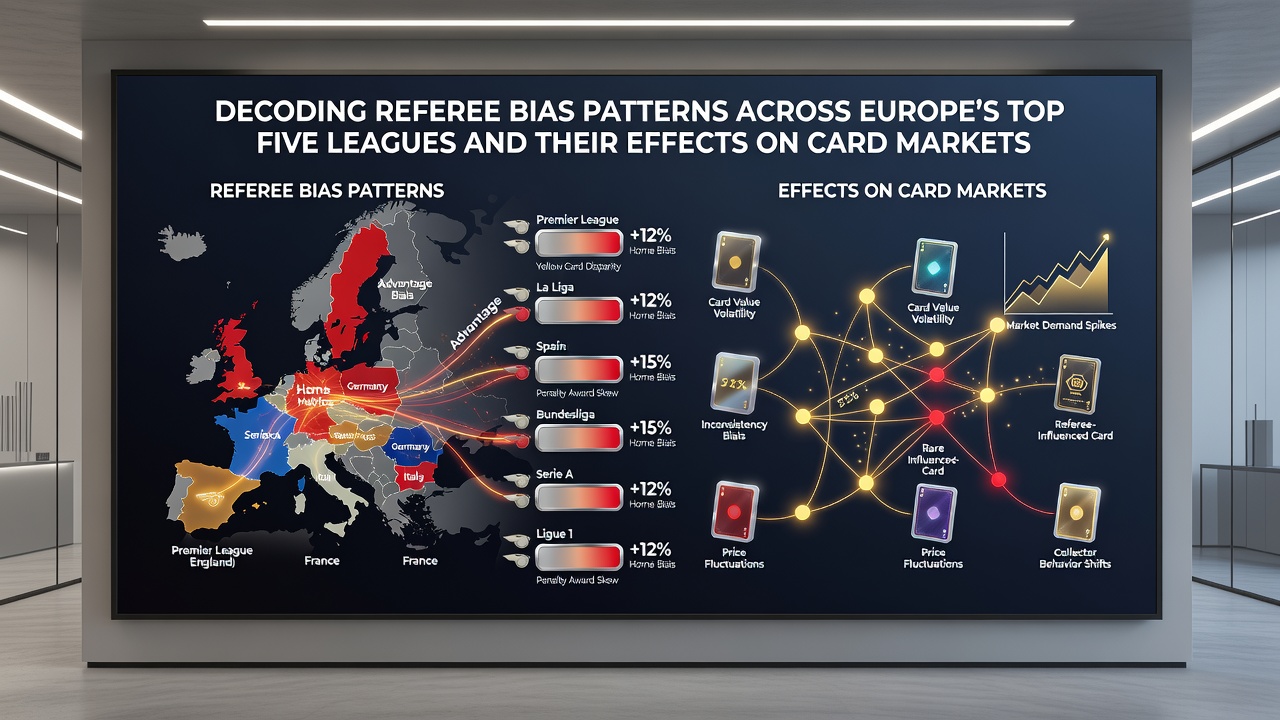
These referee patterns translate directly into card market movements because bookmakers adjust lines based on historical official assignments and league norms. When a match features an official known for strict enforcement in high-stakes fixtures, card totals move upward by 0.3 to 0.5 on average. Bettors who track these assignments gain access to value when lines fail to fully account for recent changes in referee behavior following rule clarifications issued in early 2026.
Player-specific data further refines market edges. Midfielders who average more than 2.1 tackles per 90 minutes face elevated booking rates under certain referees, particularly in away fixtures where tolerance for physical challenges drops. Markets on individual player cards reflect these correlations once lineups and official appointments become public.
External Factors Shaping Decisions
Weather conditions, fixture congestion, and broadcast scrutiny also influence card distribution. Matches played under floodlights in winter months record 8 percent more cards than daytime fixtures, while games following international breaks show slight decreases in bookings as players adopt more cautious approaches. UEFA's 2025 disciplinary review highlighted how video assistant referee interventions have reduced erroneous red cards by 22 percent across the five leagues since the system's expansion.
Observers tracking these variables note that card markets respond quickly to news of referee changes, with totals shifting within minutes of official announcements. Teams facing multiple fixtures in short periods draw more cards on average, creating opportunities in both pre-match and in-play markets when schedules tighten around European competitions.
Recent Developments Through June 2026
Rule adjustments implemented for the 2025-26 campaign regarding time-wasting and goalkeeper possession have produced a measurable uptick in cards across all leagues. Early season data through June 2026 indicates a 6 percent rise in yellow cards for deliberate delays compared with teh previous year. Referees in La Liga and Serie A apply these directives more consistently than those in the Bundesliga, where advantage continues to take precedence.
Academic studies from institutions such as the University College London Centre for Sports Analytics confirm that referee nationality affects card patterns when officials handle matches involving teams from their home countries, though the effect size remains small at 0.2 cards per game. Industry reports from the European Club Association further document how these subtle biases influence team strategies and, by extension, betting market liquidity.
Conclusion
Referee bias patterns across Europe's top five leagues continue to evolve with rule changes and technological interventions, directly affecting the structure and pricing of card markets. Those who monitor official assignments, league-specific tendencies, and contextual variables gain access to data-driven insights that align with actual on-pitch behavior. As the 2025-26 season progresses, updated datasets will refine these models further, providing clearer signals for markets centered on disciplinary outcomes.