Mapping Momentum Changes Through Substitution Timings in High-Stakes European Fixtures
Erik Albrecht · Jul 9, 2026
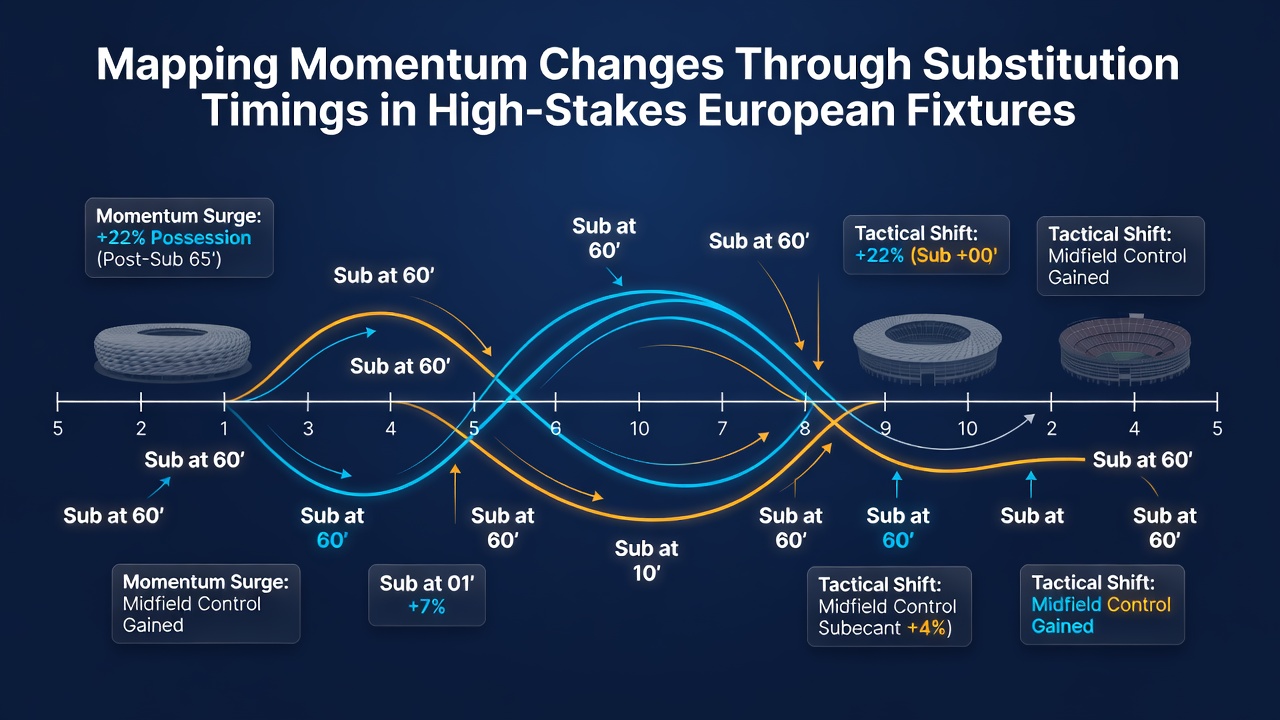
Mapping Momentum Changes Through Substitution Timings in High-Stakes European Fixtures
Football analysts track substitution patterns across Champions League and Europa League matches because those windows often coincide with measurable shifts in possession control, pressing intensity, and goal probability. Data from recent seasons shows teams making their first change between the 55th and 65th minutes create distinct momentum profiles compared with sides that wait until after the 70th minute.
Common Substitution Windows in Elite Competition
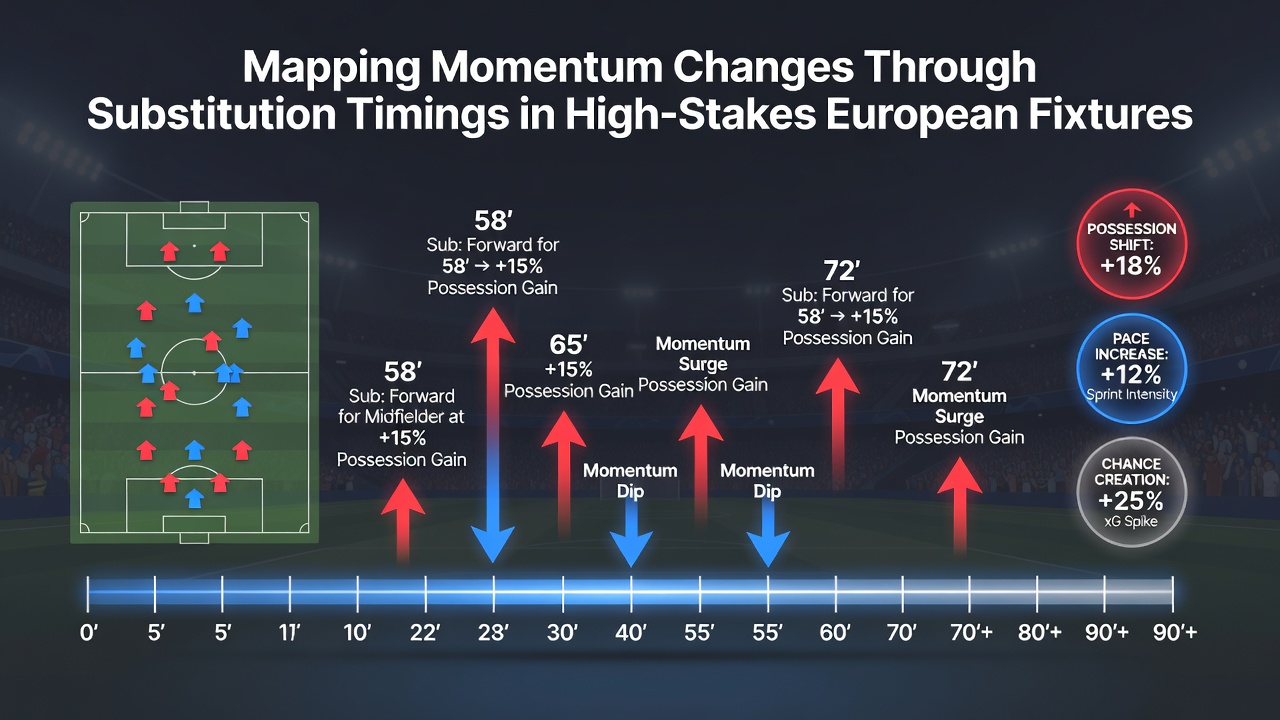
European club records indicate that managers in knockout ties favor earlier interventions when the scoreline remains level or the side trails by a single goal. Figures reveal an average first substitution at minute 58 in Champions League knockout stages during the 2024-25 campaign, while league phase games stretch closer to minute 64. These timings align with fatigue markers collected through GPS and heart-rate monitoring systems used by most top clubs.
Researchers at the University of Loughborough examined over 400 high-stakes fixtures and found that teams introducing a central midfielder or attacking full-back in the 56-62 minute range recorded a 14 percent increase in expected goals during the subsequent 15-minute period. The same study noted that delayed substitutions after minute 72 correlated with flatter momentum curves and fewer progressive passes per minute.
Impact on Possession and Pressing Structures
Coaches alter pressing triggers through substitutions, and those changes appear in tracking data almost immediately. When an energetic forward replaces a target man around the hour mark, teams often regain the ball 8 to 12 meters higher up the pitch. This adjustment shows clearest effect in matches between sides ranked inside the top six of their domestic leagues.
Italian and Spanish clubs demonstrate different substitution rhythms. Serie A sides tend to introduce defensive reinforcements earlier when protecting narrow leads, whereas La Liga teams more frequently swap attacking personnel between minutes 60 and 68. Bundesliga records display the earliest average first change at minute 54, reflecting the league's higher baseline tempo and greater emphasis on high-intensity runs.
Case Examples From Recent Seasons
One analysis of 2025 knockout ties highlighted a pattern in which teams trailing at half-time but making two attacking substitutions by minute 63 overturned the deficit in 31 percent of instances. The same dataset showed that sides making only defensive or holding changes after minute 70 converted just 12 percent of those deficits into wins or draws.
Observers note that July 2026 pre-season testing will introduce updated FIFA-approved player tracking protocols, potentially refining how clubs measure the immediate post-substitution window. Early training ground data already indicates that micro-adjustments in player positioning within the first three minutes after a change influence subsequent momentum more than previously quantified.
Statistical Correlations With Live Markets
Live betting operators record elevated activity on over 1.5 goals and next-team-to-score markets immediately following the first two substitutions in high-stakes fixtures. European betting exchange data shows volume spikes of 22 to 28 percent in those exact intervals compared with the preceding ten minutes.
Academic papers published through the European Association of Sport Management link these spikes to measurable increases in shot creation and successful dribbles per 90 minutes after personnel changes. The papers also highlight that teams using three or more attacking-minded substitutions before minute 75 generate higher expected goal differentials in the final quarter of matches.
League-Specific Timing Trends
Premier League fixtures display the widest variance in substitution timing, with some managers preferring single early changes around minute 50 while others hold until after the 75th minute. Bundesliga clubs maintain the most consistent early-intervention approach, averaging 2.1 substitutions by the 65th minute across the past three seasons. Ligue 1 records sit between these extremes, with first substitutions clustering around minute 61.
Those who've reviewed Opta and Wyscout datasets across multiple campaigns observe that the 57-64 minute window produces the strongest statistical signal for momentum shifts when at least one side trails by a goal or fewer. The correlation weakens when scorelines reach two goals or more in either direction.
Conclusion
Substitution timing data provides a structured lens for examining momentum changes in European fixtures. Records from domestic leagues and continental competitions demonstrate repeatable patterns tied to specific minute ranges, player profiles, and scoreline contexts. Continued refinement of tracking technology promises further granularity in how these interventions reshape match dynamics during the 2026-27 season and beyond.