Long Hauls and Lapses: Travel Fatigue in Cross-Border European League Clashes
Erik Albrecht · Aug 6, 2026
Long Hauls and Lapses: Travel Fatigue in Cross-Border European League Clashes
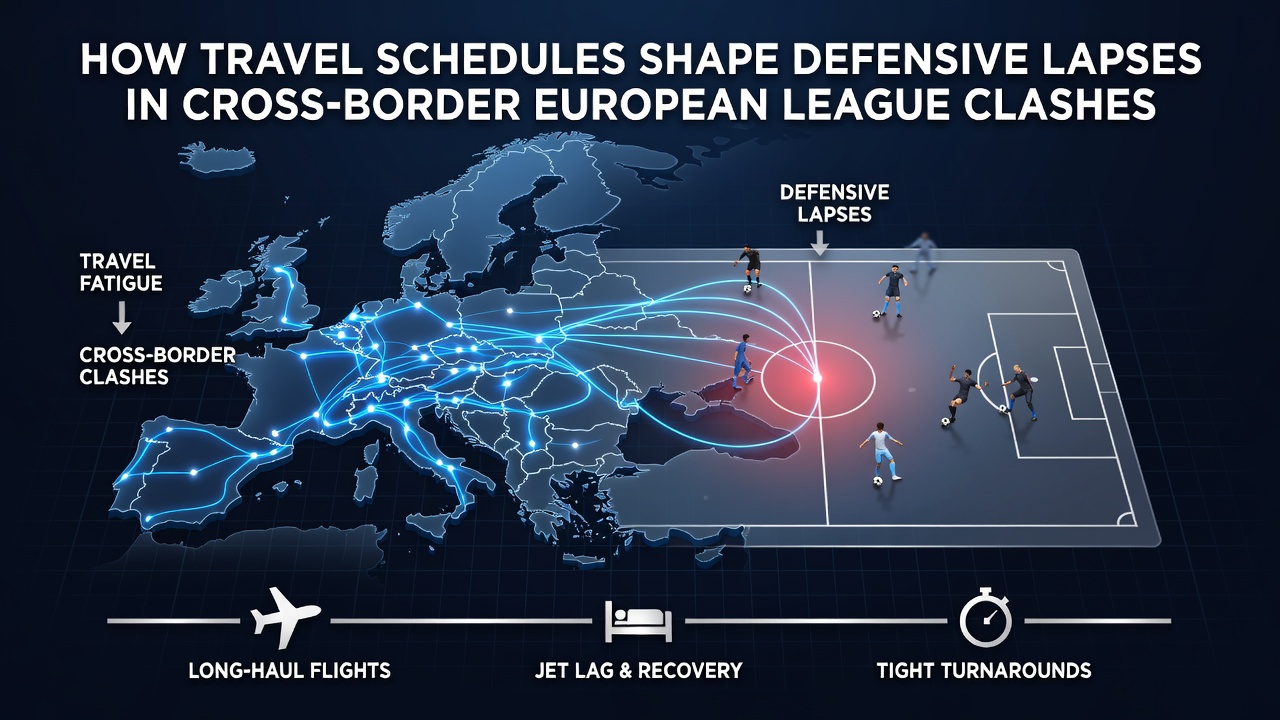
European football schedules often require clubs to cover significant distances for matches against teams from neighboring countries, and observers note that these journeys frequently coincide with increased defensive errors in the opening phases of games. Data from multiple seasons shows that teams traveling more than 800 kilometers tend to concede higher numbers of shots on target in the first 30 minutes compared to home fixtures or shorter domestic trips. Researchers at institutions across the continent have tracked these patterns through GPS and performance metrics, revealing consistent trends in backline positioning and reaction times.
Distance Metrics and Schedule Patterns
Clubs competing in cross-border fixtures, such as those in the UEFA Champions League or Europa League group stages, face variable travel demands depending on their geographic location and fixture clustering. Teams based in northern Europe, for instance, routinely log flights to southern venues while those in the east manage connections through central hubs, and figures from the 2025-2026 campaign indicate average one-way distances exceeding 1,200 kilometers for several clubs. August 2026 schedules already list several high-distance pairings in early rounds, including matches between Scandinavian sides and Iberian opponents, where kickoff times follow overnight travel windows of 12 hours or more. Performance analysts compile these routes alongside match statistics to identify correlations between total travel time and the frequency of misplaced passes in defensive zones.
Physiological Effects on Player Readiness
Sports science studies document how extended journeys disrupt sleep cycles and hydration levels, factors that directly influence neuromuscular response during high-intensity defensive actions. Data collected from heart-rate monitors and cognitive tests administered upon arrival demonstrate slower decision-making speeds among players who cross multiple time zones or endure delayed flights, even within Europe's relatively compact geography. One research project coordinated by a German university examined Bundesliga teams returning from away games in eastern Europe and recorded elevated error rates in aerial duels during the subsequent 45-minute period. These measurements align with findings from French and Italian laboratories that link cumulative fatigue to reduced sprint recovery between defensive transitions.
Case Examples from Recent Campaigns
Take the 2024-2025 season when a Portuguese club traveled to a Ukrainian opponent and conceded three goals from set pieces in the first half, a sequence analysts attributed partly to disrupted preparation routines after a 14-hour journey involving two connections. Similar patterns appeared in matches involving Belgian sides facing Romanian teams, where defensive line gaps widened measurably according to tracking data released by league statisticians. Observers note that clubs with dedicated recovery protocols, including on-site sleep pods and adjusted training loads, sometimes mitigate these effects, yet the baseline increase in lapses remains evident across aggregated datasets. A study published by an academic group in the Netherlands further quantified how teams arriving less than 24 hours before kickoff showed higher rates of intercepted passes originating from the back three or four.
Recovery Windows and Tactical Adjustments
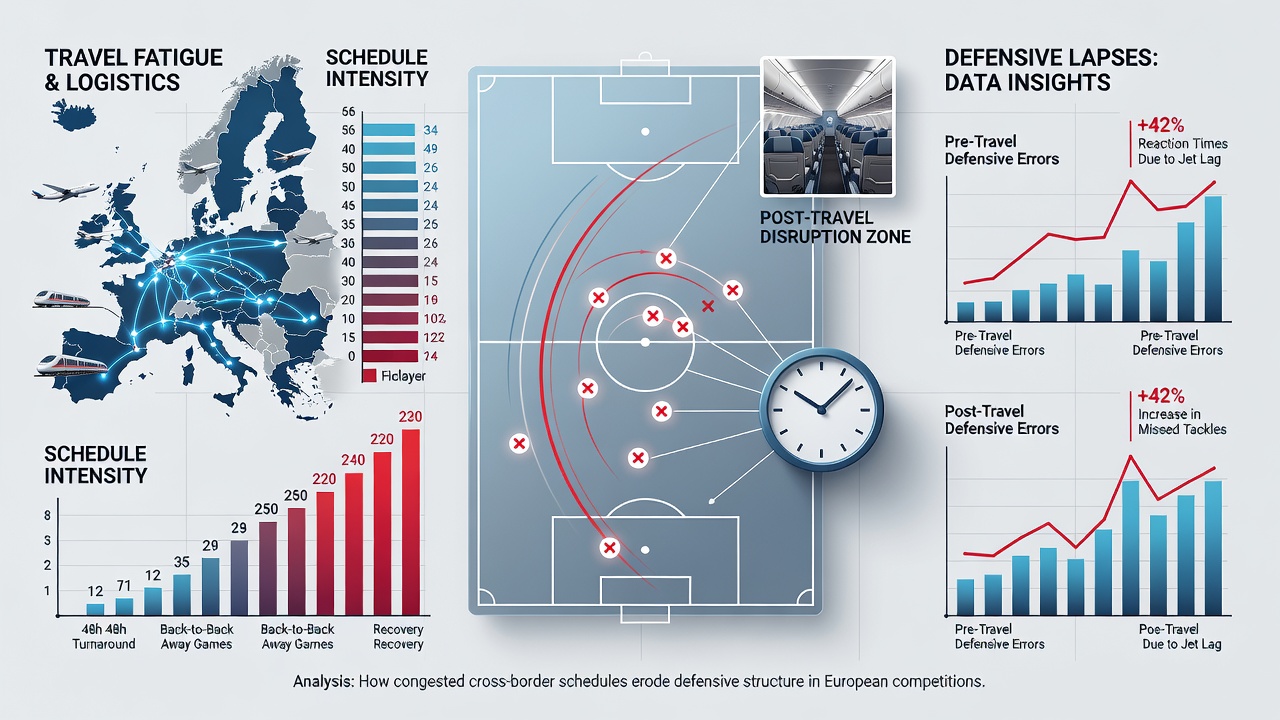
Coaches respond to these travel realities by modifying lineups and pressing triggers, often favoring more compact defensive shapes that reduce exposure to transition play. Figures released by a Swiss research institute tracking Europa Conference League fixtures reveal that teams granted at least 36 hours between arrival and kickoff reduce their concession rate by approximately 12 percent compared to shorter turnaround groups. August 2026 calendars already incorporate several midweek cross-border legs, prompting clubs to experiment with earlier departures and chartered flights to protect rest periods. Performance logs indicate that defensive midfielders and centre-backs, who cover the greatest distances during matches, register the most pronounced drops in duel success rates following extended travel.
League-Wide Data Trends
Comprehensive reviews of European competition results over five seasons demonstrate that away sides traveling across borders concede 0.8 more goals per game on average when the fixture follows a domestic match played within 72 hours. These statistics, drawn from multiple national associations and compiled by independent analysts, highlight particular vulnerabilities in the channels and at the far post where reaction times prove critical. Teams from smaller domestic leagues that qualify for continental competitions encounter these challenges more frequently, and records show elevated error counts during August and September windows when schedules intensify. External reports from bodies such as the FIFA Technical Study Group and university-led projects in Spain provide supporting context on how logistical variables interact with physical output.
Conclusion
Travel schedules continue to shape outcomes in cross-border European league clashes through measurable effects on defensive coordination and reaction speed. Aggregated performance data across recent campaigns confirms higher lapse rates for teams facing longer journeys, while recovery strategies offer partial mitigation. As 2026 schedules unfold with new fixture clusters, ongoing monitoring by sports scientists and league statisticians will further clarify these relationships through expanded datasets and refined tracking methods.