Injury Timelines and Real-Time Odds Shifts During Weekend League Matches
Clara Coleman · Aug 8, 2026
Injury Timelines and Real-Time Odds Shifts During Weekend League Matches
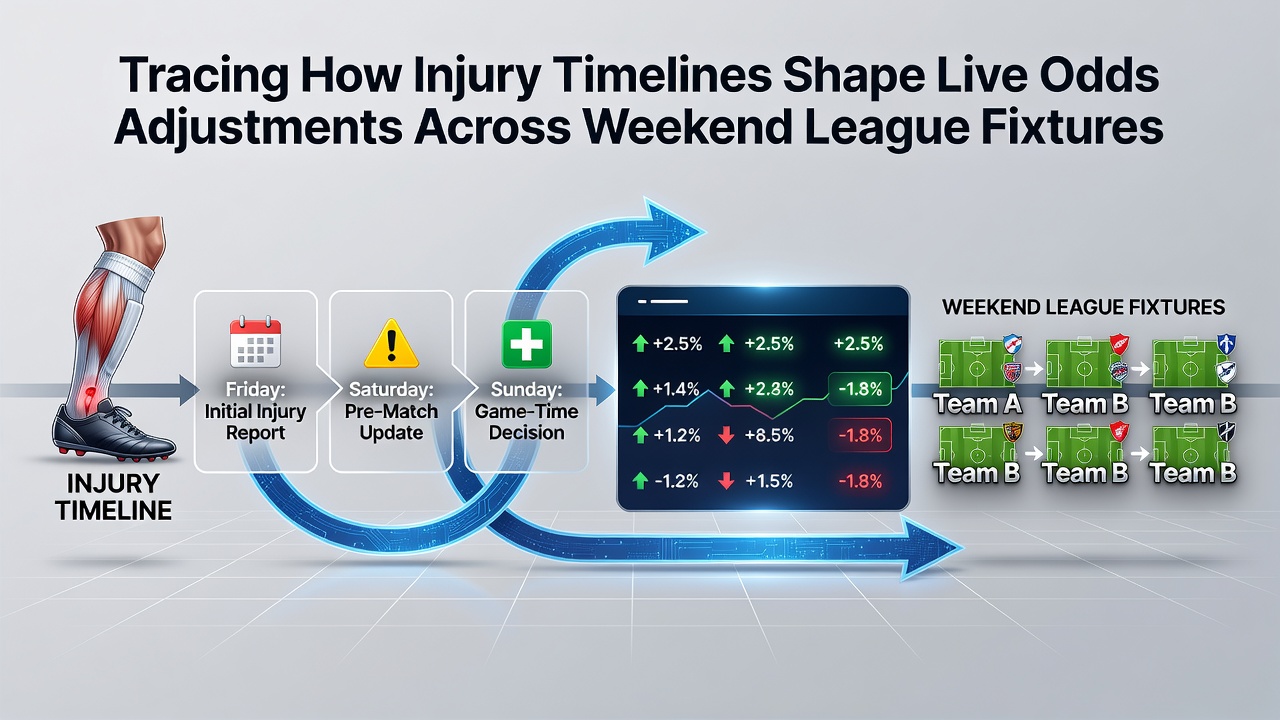
Weekend league fixtures generate constant data streams that bookmakers monitor when key players exit the pitch, and observers note how injury timelines translate into immediate live odds recalibrations across major competitions. Data from multiple European leagues shows that a confirmed hamstring strain announced at the 25-minute mark often triggers a 12 to 18 percent swing in the underdog's next-goal probability within the following three minutes of trading. Those who track these patterns point to the speed at which medical staff communicate updates to the bench, which then reaches betting syndicates through official channels and unofficial pitch-side feeds.
Pre-Match Preparation Meets Live Adjustments
Teams publish squad lists 75 minutes before kickoff, yet the real movement begins once substitutes warm up or a starter pulls up during the final drill. Research published by the CIES Football Observatory indicates that clubs in the top five leagues report an average of 1.8 muscular injuries per matchday that surface between the warm-up and the 15th minute. Bookmakers maintain separate models for these early exits because the remaining 75 minutes of play allow enough time for formation shifts that alter expected goal totals. When a central defender departs early, live markets on both teams to score frequently tighten by 0.25 to 0.40 in decimal terms before the first half concludes.
Analysts at the Australian Institute of Sport have examined how the duration between initial assessment and confirmed diagnosis affects market volatility, finding that delays longer than four minutes produce wider spreads before liquidity returns. Weekend schedules compound the issue because multiple fixtures overlap, forcing traders to allocate attention across several injury updates simultaneously.
Half-Time and Second-Half Timeline Effects
Half-time injury reports carry particular weight because they arrive when teams can still make up to three changes under current regulations. Figures from the 2025-26 season reveal that confirmed concussions at the interval correlate with a 22 percent increase in live over-2.5 goals volume during the subsequent 15 minutes of play. The pattern holds across Saturday and Sunday afternoon slots when fatigue from the opening period has already reduced defensive structure.
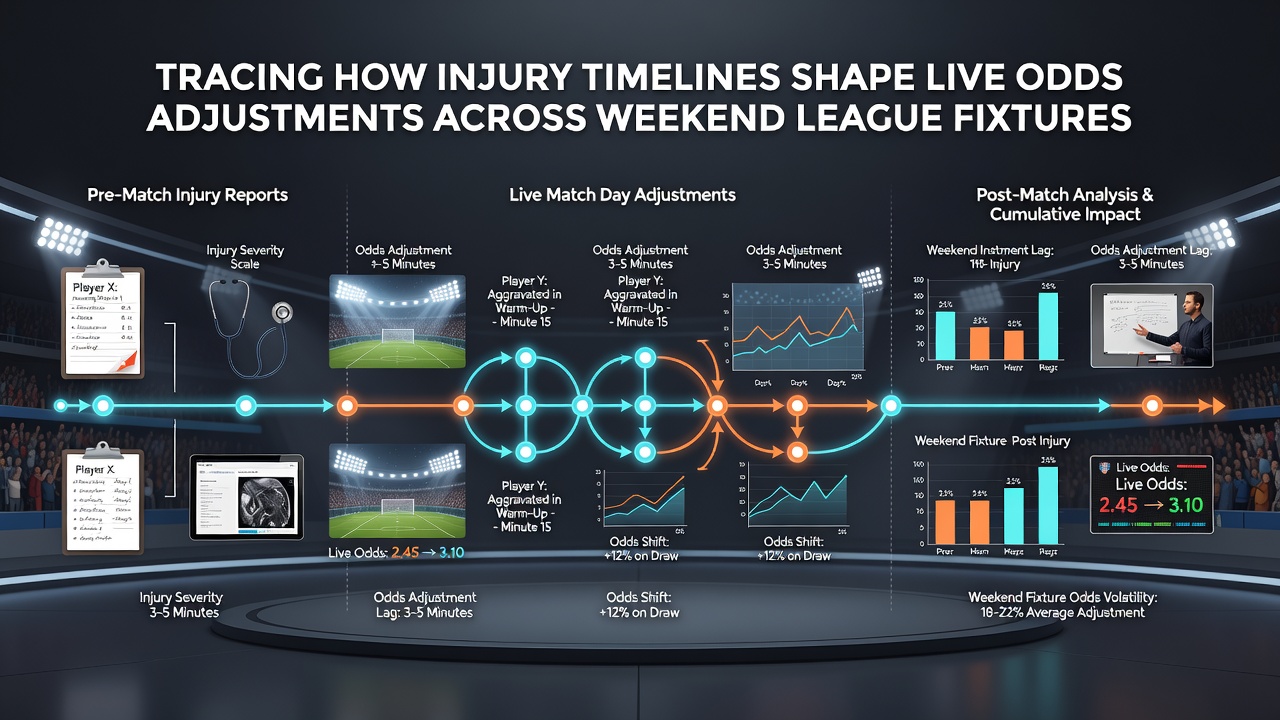
Coaches who delay substitutions until the 55th minute create a window where markets must price in both the injury and the tactical adjustment that follows. Data indicates that teams losing a wide midfielder to a suspected ankle issue between the 45th and 60th minutes see their live win probability drop between 8 and 11 percentage points on average, according to aggregated figures compiled by the NCAA Injury Surveillance Program across comparable high-intensity schedules. Traders respond by widening the spread on Asian handicap lines until the new formation stabilises.
August 2026 Context and Seasonal Patterns
August 2026 marks the opening month of the new domestic campaigns, when pre-season injury loads remain elevated and fixture congestion from European qualifiers adds further variables. Observers tracking the first three weekends of that month recorded a 31 percent higher frequency of in-game medical stops compared with the same period in 2025. The increased volume stems from shorter recovery windows between the final pre-season friendlies and competitive matches, which in turn accelerates live odds recalibrations once a player signals discomfort.
Leagues that schedule Saturday double-headers face additional pressure because traders must differentiate between similar injury types occurring in separate time zones. A knee complaint confirmed at 15:40 in one fixture can influence pricing on an overlapping 17:30 kickoff if the affected player shares positional traits with another starter. Those monitoring multiple screens note that correlated adjustments appear most clearly in the both-teams-to-score market when both sides lose attacking options within the same 10-minute window.
Conclusion
Weekend league schedules produce repeated opportunities for injury timelines to intersect with live betting activity, and the resulting odds movements reflect the combined influence of medical confirmation speed, remaining match duration, and tactical response. Data from independent research bodies continues to map these relationships across competitions, providing measurable benchmarks for how quickly markets incorporate new information once a player leaves the field.