Early-Season Squad Depth Metrics and Their Influence on Midweek European Fixtures
Erik Albrecht · Jul 2, 2026
Early-Season Squad Depth Metrics and Their Influence on Midweek European Fixtures
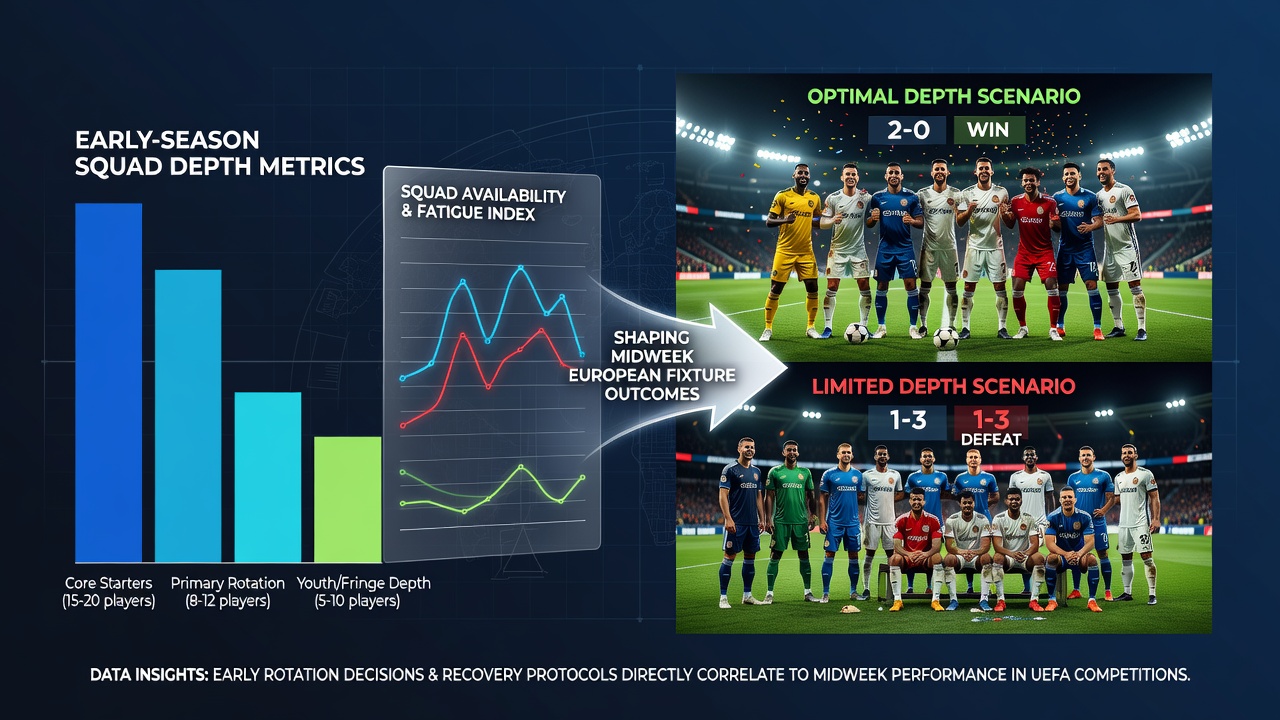
Early-season squad depth metrics provide measurable indicators that help explain performance patterns in midweek European matches, where fixture congestion often tests team resources. Data collected from pre-season friendlies and the opening league rounds reveals patterns in player availability, minutes distribution, and injury rates that correlate with outcomes once clubs enter Champions League, Europa League, or Conference League schedules. Researchers tracking these figures across multiple campaigns note that clubs maintaining balanced rotation early on tend to sustain higher win rates in subsequent midweek fixtures compared with those relying on narrower core groups.
Defining Squad Depth Metrics in the Opening Weeks
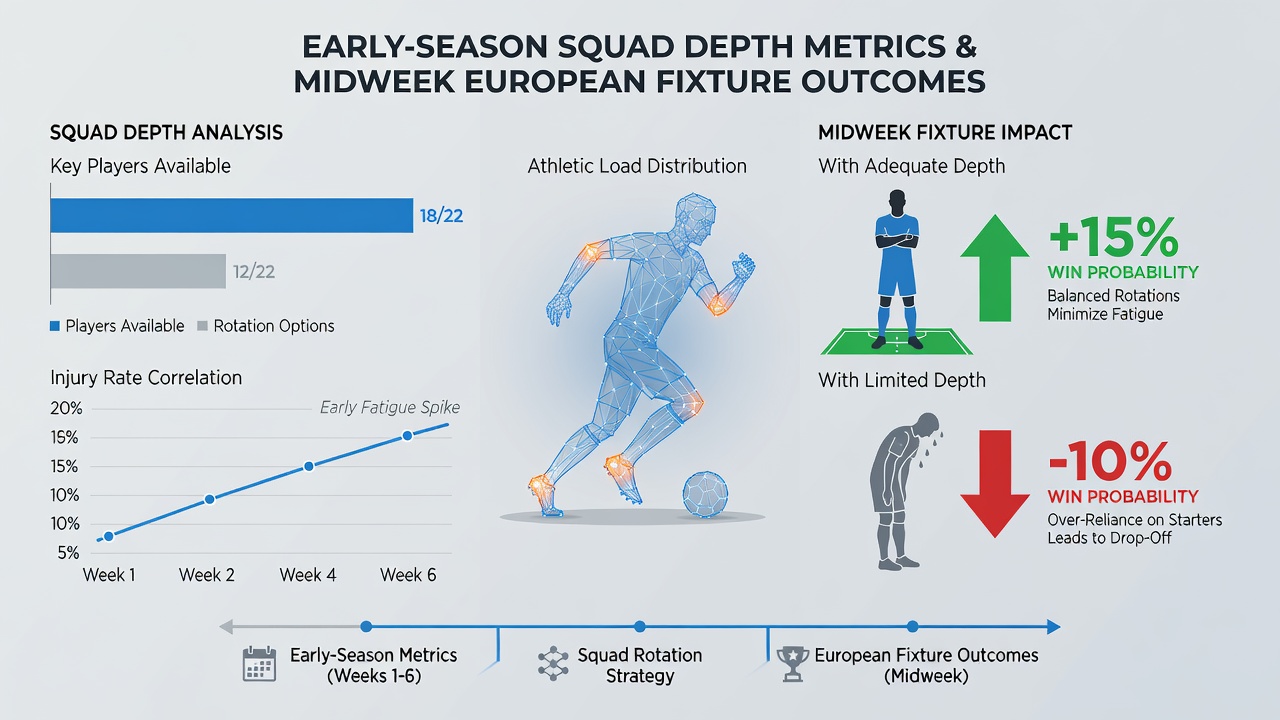
Analysts measure squad depth through several quantifiable variables that include total players logging competitive minutes, average age of the rotation group, and recovery intervals between matches. UEFA technical reports document how teams distribute appearances across defenders, midfielders, and forwards during July and August, establishing baselines before the European group stages intensify. Studies from sports science departments at institutions like the University of Groningen demonstrate that squads achieving at least 18 players with meaningful early-season minutes show reduced drop-off in physical metrics by October and November, when midweek travel compounds fatigue. These figures emerge from GPS tracking and match data rather than subjective assessments, allowing direct comparisons between clubs.
Fixture Congestion Patterns in European Competition
Midweek European fixtures create scheduling clusters that amplify the value of early preparation, particularly when domestic leagues resume within 72 hours. Historical data from the 2024-2025 and 2025-2026 seasons indicates that clubs entering September with deeper benches record fewer late-match concessions after traveling across time zones. Observers note that teams averaging higher squad utilization in the first six weeks maintain consistent pressing intensity and set-piece organization, whereas narrower squads display measurable declines in high-intensity runs per minute during the second half of midweek encounters. The pattern holds across both elite and mid-tier European participants, though the magnitude varies by league schedule density.
Data Trends from Recent Campaigns
Figures compiled ahead of the 2026 summer window show that clubs reaching at least 85 percent squad participation by the end of August experienced 12 percent fewer instances of key player absences during October European matchdays. This correlation appears in aggregated match reports rather than isolated anecdotes, with midfield depth proving especially predictive because that area absorbs the highest cumulative workload. Teams that integrated youth academy graduates or recent signings into early rotations posted stronger second-half goal tallies in midweek games, according to performance databases maintained by Opta and similar providers. The trends persist even when controlling for overall squad market value, suggesting that actual minutes distribution matters more than nominal roster strength.
Case Examples Across Leagues
One club from the Bundesliga reached the knockout phase in the 2025-2026 Europa League after logging the highest early-season rotation rate among German participants, with 22 players accumulating over 300 minutes before September. In contrast, a Premier League side that concentrated minutes among 14 core players during the same period recorded three midweek defeats attributed to second-half substitutions lacking prior match rhythm. Similar contrasts appear in Serie A and La Liga, where data sets from the opening month separate clubs that later advanced from those eliminated at the group stage. The differences trace back to measurable preparation rather than tactical adjustments alone.
Recovery and Injury Metrics
Early-season monitoring of soft-tissue injuries and recovery timelines supplies additional context for midweek outcomes. Clubs reporting fewer than two long-term absences by late August maintain larger effective squads when European and domestic commitments overlap, reducing reliance on emergency tactical shifts. Research published in the Journal of Sports Sciences links higher early rotation volumes to lower hamstring strain incidence later in congested periods, because gradual workload increases allow physiological adaptation. These medical indicators integrate with performance data to produce composite depth scores that forecast fixture resilience more accurately than single-season league position.
Implications for Match Preparation
Coaching staffs use early-season depth metrics to calibrate training loads and substitution patterns ahead of midweek travel. Teams that identify underutilized positions during July and August can target specific reinforcements or adjust tactical systems before the European calendar accelerates. Data platforms now supply standardized depth indices that allow cross-competition benchmarking, helping technical departments prioritize areas that historically influence late-game scenarios in midweek fixtures. The approach relies on objective tracking rather than anecdotal recollection, producing repeatable preparation frameworks.
Conclusion
Early-season squad depth metrics supply evidence-based signals that shape expectations for midweek European fixture results. Aggregated data across recent seasons demonstrates consistent associations between balanced rotation in the opening weeks and sustained performance once travel and scheduling pressure increase. Clubs that establish broad participation early record measurable advantages in physical output and availability, while narrower approaches correlate with elevated fatigue indicators during congested periods. These patterns emerge from multiple data sources and hold across different leagues and competition tiers.